settings
In Search of Lost Time [volume 1] vocabulary
7 archaic vocabulary words

help & settings
[x]
-

Giorgione
-
synonyms: Great George ???
tags: [artist]
► definition
Definition:(i. e. Great George), the sobriquet given to Giorgio Barbarella, one of the early masters of the Venetian school, born near Castelfranco, in the NE. of Italy; at Venice he studied under Giovanni Bellini, and had Titian as a fellow-pupil; his portraits are among the finest of the Italian school, and exhibit a freshness of colour and conception and a firmness of touch unsurpassed in his day; his works deal chiefly with scriptural and pastoral scenes, and include a "Holy Family" in the Louvre, "Virgin and Child" in Venice, and "Moses Rescued" (1447-1511).Rev. James Wood. The Nuttall Encyclopedia (1907)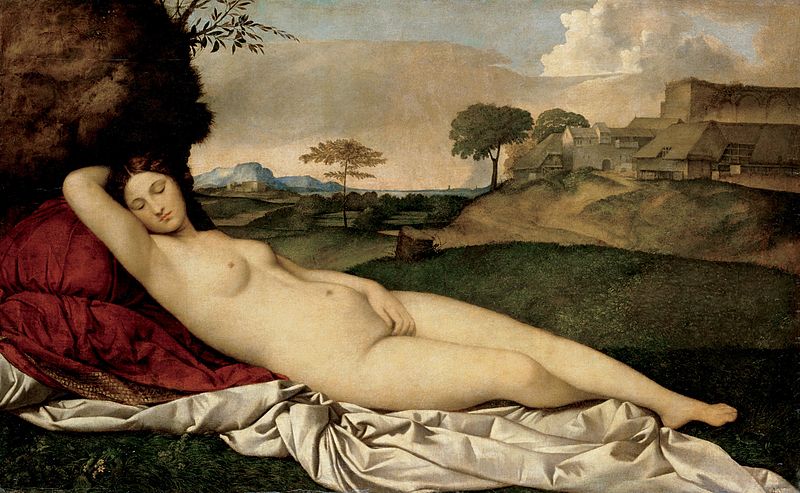
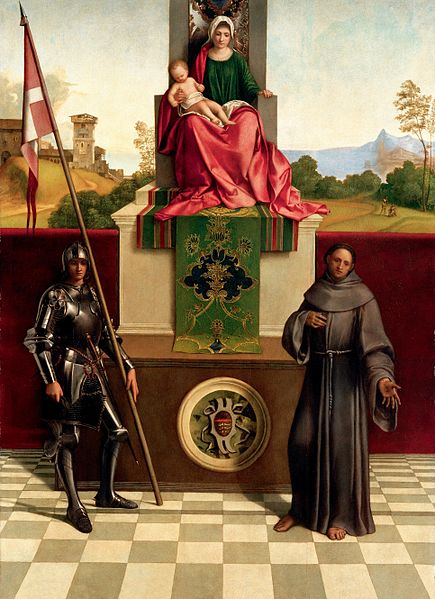 image 1: Sleeping Venus (1508)iimage 2: Madonna and Child between St. Francis and St. Nicasius (1504)
► uses
Uses:
The demand for Giorgione's work soon grew so that he had to hire assistants. [...] One was Sebastiano del Piombo, who later moved to Rome and found favor with Pope Clement VII; the other was Titian. When Giorgione died in his early thirties [...] he left behind for consolation these "two worthy disciples and excellent masters, Sebastiano ... and Titian of Cadore, who not only equaled but surpassed him."
Jay Williams. The World of Titian, p.54 Time-Life Books (1968)
---
Titian loved Giorgione so well that he even imitated his faults. At first this high compliment was pleasing to Giorgione; then he became indifferent, and finally disgusted. The very sight of Titian gave him a pain.
He avoided his society. He ceased to speak to him when they met, and forbade his friends to mention the name "Titian" in his presence.
Elbert Hubbard. Little Journeys To The Homes Of Eminent Painters (1916)
help with search